
Crunchy Anarchy
Resisting The Human Industrial Complex to Being Human Again
What Musk’s $200 Billion Really Looks Like (And What It Doesn’t)
Elon Musk’s $200 billion net worth sounds massive—but what does that really look like next to the median American’s $200,000? A rice-based visual puts it in perspective. Learn why median wealth tells a more honest story than the average—and how wealth inequality hides in plain sight.
Help! I am politically homeless
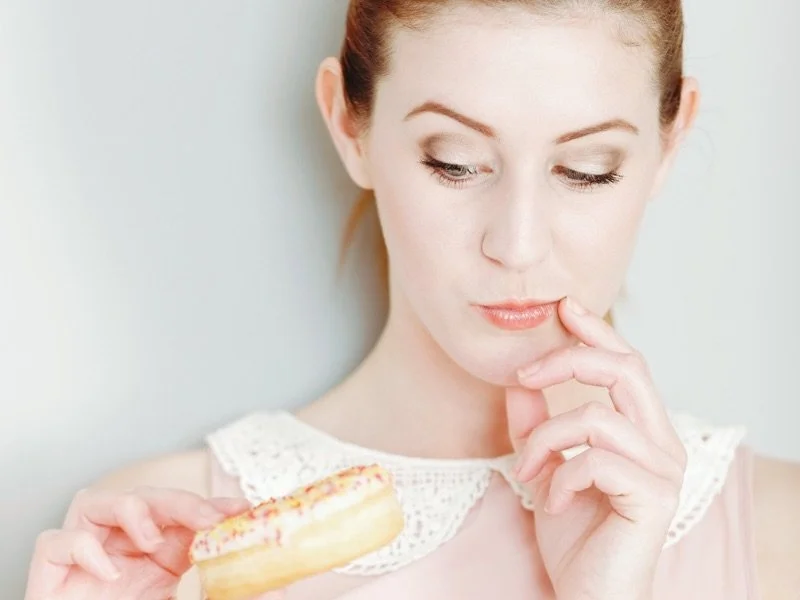
I don’t know where I stand politically anymore. I have two ideologies—one idealistic, one practical—and neither fits neatly into today’s categories. I believe in decentralization, radical empathy, and the right to live outside the binary. But the current climate doesn’t make space for that. Now, even crunchy granola people and divine feminine types are treated like a threat. Is it possible to want equity and nuance, sovereignty and compassion? If that makes me a centrist—or a libertarian—I guess I’ll take the label. I just want my doughnut hole back: a clear, compassionate center.

Why You Need To Start a Cult NOW!
In a time where chaos reigns and truth is stranger than fiction, the opportunity for reinvention has never been clearer. From starting your own cult to launching a disruptive art movement or underground newspaper, history shows that instability breeds innovation. The future is up for grabs—if you dare to take it. Ready to reshape the world? Welcome to Wonderland.

On Women Doing it Their Way, Rockets, and the Right to Wonder
What I saw this week—women rocketing into space—should’ve been a story of progress. A celebration. Instead? The internet served up a tired buffet of mockery. Not of the science. Not of the technology. But of the women. Their hair, their joy, their ambition.
Lauren Sánchez, Katy Perry, Gayle King, Aisha Bowe, Amanda Nguyễn—these women earned their seats. They represent something expansive, something hopeful. But we’ve become allergic to wonder. Addicted to cynicism. And it’s costing us.
Because if we can’t even celebrate a rocket launch without tearing each other down, what can we rise to?

I Saw the End. It Was the Beginning.
I Saw the End. It Was the Beginning.
What if the afterlife isn’t somewhere we go, but something we live—again and again?
During a moment of deep silence in Quaker worship, I received something that felt more like a “wisdom upload” than a vision—a startling, shimmering insight into the nature of time, death, and the soul. It wasn’t about heaven or hell, reward or punishment. It was about cycles. About grace. About doing this whole life thing more than once, not as punishment, but as possibility.
I know how this sounds. And believe me, I didn’t want to write it. But it’s clung to me like truth, and I’m sharing it in case you’ve felt something similar—some glimmer of time folding in on itself, some whisper that love outlasts endings.
This essay is raw, a little metaphysical, and probably too weird for most theology books. But if you’re even a little curious, I hope you’ll read it.
Because maybe, just maybe, we’re all on the same eternal school bus, learning how to get it right—together.

The Menopause Marketing Psyop
Breaking Free From the Marketing Matrix:
Menopause is often framed as a crisis, a medical emergency that demands immediate intervention. But what if we reframe it as a natural transition—an opportunity to embrace new wisdom, freedom, and self-acceptance? By doing so, we can shield ourselves from the fear-driven marketing that profits off insecurity.
As women, we’re often told that menopause needs to be “fixed” with products like HRT, supplements, and treatments, but what if the solution lies in accepting this change instead of fearing it? Discomfort can be part of the process, but it’s not a crisis, and it doesn’t have to be endured in silence or with shame. Every woman’s experience is different, and it’s essential to honor your own unique journey without the pressure to fit a mold or adhere to someone else’s standards.
By sharing our honest stories and questioning the sources of these narratives, we can reclaim our agency and resist being driven by products or narratives that don’t serve us. Let’s stop buying into the marketing machine that profits from our uncertainty and embrace a more authentic, empowered approach to this life transition.

Mary’s Breasts: On Flesh, Faith, and the Terror of Love
The poem Mary’s Breasts by Paula Lippard Justice stirs profound reflections on love, faith, and sacrifice. With visceral imagery and a deep understanding of both the human body and the spiritual journey, the poem invites readers to imagine Mary not as an icon, but as a woman—her body a vessel of both grief and grace. The post explores the mystical duality between Mary and Jesus, shedding light on the generative nature of love, the vulnerability required to fully embrace it, and the powerful spiritual devotion expressed through ritual.

Will The REAL Jesus Please Stand Up?
Was Jesus a revolutionary or a shepherd designed to keep the flock in line? His original message was one of liberation—breaking oppression, resisting empire, and living through love and justice. But as Christianity spread, it transformed. Rome turned faith into a tool of control, and Paul’s rebranding of Jesus made submission more important than action. Today, much of modern Christianity still carries this legacy. If Jesus came to set captives free, then maybe following him means flipping the tables—rejecting systems that use faith as a yoke and returning to acts of love, justice, and resistance.

The Feminist Paradox: A Thought Experiment
Feminism set out to challenge oppressive systems, but has it truly dismantled them—or just secured a better seat at the table? The structures of hierarchy, competition, and transactional power remain intact, and instead of building something new, feminism often works within the same framework it set out to challenge. What if the real path forward isn’t about climbing the ladder but stepping off of it entirely?
We’ve been conditioned to see success through the lens of individual achievement, to measure progress in competition rather than cooperation. But real change won’t come from swapping out the players—it comes from dismantling the game itself. What if feminism, as we know it, is part of a controlled spectrum of debate, reinforcing the very system we claim to resist?
I’m not here to argue; I’m here to think through this with you. If we step outside the paradigm we’ve inherited, where do we go next?
The Power of Conscious Consumerism: Small Choices Big Impact
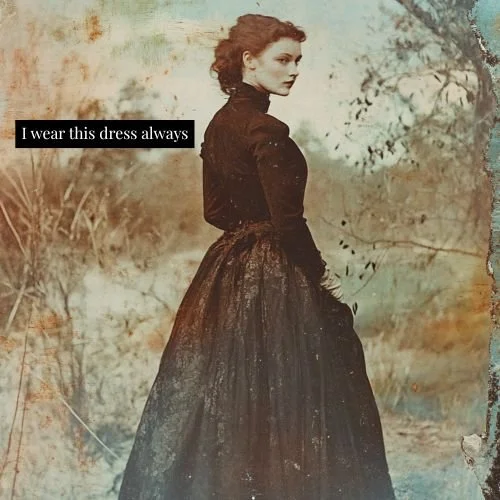
Conscious consumerism isn't about perfection—it's about intention. While some are diving deep into researching every brand's ethical footprint (think Portlandia-level dedication), the truth is that simply consuming less makes a bigger impact than consuming perfectly. The more accessible a movement, the wider its reach. Real change doesn't happen through dramatic shifts that trigger resistance; it happens quietly, organically, below the radar—like a revolution by whisper rather than shout. And the beautiful part? Once you start making intentional choices about what you buy, that mindfulness naturally spills into every area of your life.
Dear “Nice” Straight Men
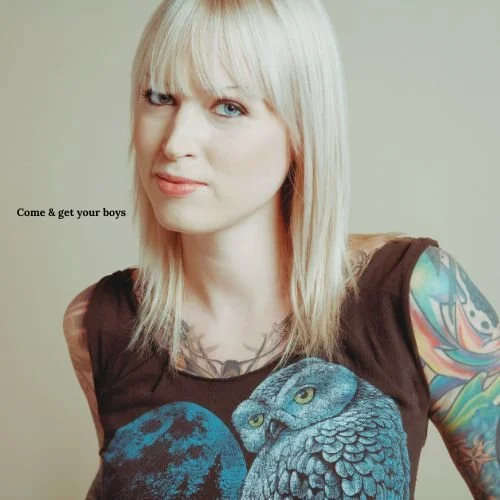
Women aren’t leaving relationships because they ‘hate men’—they’re leaving because the constant undercurrent of resentment from certain corners of masculinity is exhausting. If being a ‘good woman’ means being seen as some malfunctioning appliance that needs to be fixed (but never truly loved), why would anyone sign up for that?
So, to the men who don’t think like this—y’all need to manage your boys. Because if this unchecked hostility continues, we’re heading toward a world where love is just another transaction, and you’ll never really know if your wife loves you… or if she’s just legally obligated to.
Maybe it’s time to speak up. Or forever hold your own piece.

Is “Check Your Privilege” a Psyop?
What if ‘check your privilege’ isn’t about justice at all? What if it’s just another way to keep us fighting each other instead of the system? When a phrase meant to raise awareness gets used as a mute button, we don’t challenge privilege—we gatekeep it. And if we can’t have real conversations, where does that leave us? Trapped in echo chambers, mistaking moral purity for progress. If we actually want change, we need strategy, not just slogans.

Chaos for Breakfast: Survival Guide for the Sanity-Challenged
Feeling like the world is designed to keep you on edge? You’re not alone. From algorithm-driven outrage to never-ending news cycles, our emotions are being manipulated to keep us reactive instead of rational. In this post, we break down how to reclaim your cognitive autonomy, escape the emotional traps set by media and tech, and reconnect with real human communities. The antidote to chaos isn’t more outrage—it’s thinking critically, questioning assumptions, and stepping outside the algorithm. Ready to regain your sanity? Let’s talk.

You Know You’re in a Cult If: 10 Warning Signs for Both the Right and the Left
Think only other people fall into cult-like thinking? Think again. Whether you lean left or right, tribalism has a way of sneaking in, demanding loyalty, and shutting down independent thought. From unquestionable leaders to scapegoating outsiders, this post breaks down the warning signs that your political or ideological group might be more of a cult than a movement. Ready for a reality check? Let’s dive in—no sacred cows allowed.

Embracing Compassion Over Judgment: Call for Kindness in a Divided World
Lately, it’s become disturbingly normal to see people mocked online—someone shares a thought, and within seconds, they’re ridiculed. Maybe it’s misplaced revenge, an attempt to feel superior, or just another cycle of hurt being passed along. But what we’re really witnessing is tolerated bullying.
Imagine this happening in real life—to a coworker in a meeting or a child in a classroom. The sting of relentless laughter, meant to diminish rather than uplift, is more than hurtful; it’s damaging. And yet, somehow, we’ve accepted it as part of the culture. But should we?
Fear of judgment keeps us from growing, from connecting, from evolving. If we truly want a less divided world, it starts with choosing compassion over cruelty. No one should be considered “fair game” for mockery. Instead of tearing people down, let’s choose to lift them up.

Randy and the Fabulous Crab Shack: A Life of Joy, Service, and Radical Authenticity
Some lives are measured in achievements—others in the depth of their presence. Randy was the latter. A surfer, a host, a modern-day Dionysus, he lived not for status or success but for the pure joy of being. His Malibu home, the legendary Crab Shack, was a haven for community, laughter, and radical hospitality. Even in his final moments, as fires threatened his beloved home, Randy remained—devoted to the life he built. His story is a reminder that true richness lies not in what we own, but in how freely we give ourselves to others.

How to Be a Whole Human in an Ultra-Processed World
Everything around us is being processed, optimized, and packaged for maximum convenience—but at what cost? Our relationships, faith, exercise, and even emotions have been reduced to hyper-palatable, ultra-processed versions of what they once were. We recognize how artificial food hijacks our biology, but do we see how an artificial life hijacks our humanity?
From social media replacing real community to gym-built bodies disconnected from natural movement, we are being shaped into something more efficient but less whole. The solution? Reclaim what makes us fully human—authentic connection, meaningful movement, and mindful consumption. It’s time to break free from the ultra-processed world and live with depth, presence, and intention.